
Granite jẹ́ irú àpáta igneous tí a gbẹ́ nítorí agbára rẹ̀ tó ga jùlọ, ìwọ̀n rẹ̀, agbára rẹ̀ tó lágbára, àti ìdènà ìbàjẹ́ rẹ̀. Ṣùgbọ́n granite tún ní ọ̀pọ̀lọpọ̀ nǹkan - kì í ṣe fún àwọn onígun mẹ́rin àti onígun mẹ́rin nìkan! Ní tòótọ́, a fi ìgboyà ṣiṣẹ́ pẹ̀lú àwọn èròjà granite tí a ṣe ní àwọn ìrísí, igun, àti àwọn ìlà gbogbo onírúurú ní ìgbà gbogbo—pẹ̀lú àwọn àbájáde tó dára jùlọ.
Through our state of the art processing, cut surfaces can be exceptionally flat. These qualities make granite the ideal material to create custom-size and custom-design machine bases and metrology components. Granite is:
■ ẹ̀rọ tí a lè fi ṣe ẹ̀rọ
■ pẹrẹsẹ gangan nigbati a ba ge ati pari
■ kò lè jẹ́ kí ipata bàjẹ́
■ tó le koko
■ pípẹ́ títí
Àwọn ohun èlò granite náà rọrùn láti fọ. Nígbà tí o bá ń ṣẹ̀dá àwọn àwòrán àdáni, rí i dájú pé o yan granite fún àwọn àǹfààní rẹ̀ tó ga jùlọ.
Àwọn ìlànà / Àwọn ohun èlò ìfọwọ́sowọ́pọ̀ gíga
Granite tí ZHHIMG ń lò fún àwọn ọjà àwo ojú ilẹ̀ wa ní ìwọ̀n quartz tó ga, èyí tó ń fúnni ní agbára láti yípadà àti láti ba jẹ́. Àwọn àwọ̀ Superior Black wa ní ìwọ̀n ìfàmọ́ra omi tó kéré, èyí tó ń dín agbára ìṣàyẹ̀wò rẹ kù nígbà tí o bá ń tò ó lórí àwọn àwo náà. Àwọn àwọ̀ granite tí ZHHIMG ń fúnni mú kí ìmọ́lẹ̀ díẹ̀, èyí tó túmọ̀ sí wí pé ojú rẹ kò ní ríran dáadáa. A ti yan àwọn irú granite wa nígbà tí a ń ronú nípa ìfàmọ́ra ooru láti jẹ́ kí apá yìí kéré.
CUSTOM APPLICATIONS
Tí ohun èlò rẹ bá nílò àwo tí ó ní àwọn àwòrán àdánidá, àwọn ohun èlò tí a fi okùn sí, àwọn ihò tàbí àwọn ẹ̀rọ míràn, o gbọ́dọ̀ yan ohun èlò bíi Black Jinan Black. Ohun èlò àdánidá yìí ní agbára gíga, ìdènà ìgbọ̀nsẹ̀ tó dára, àti agbára ẹ̀rọ tí ó dára síi.
Ó ṣe pàtàkì láti kíyèsí pé àwọ̀ nìkan kìí ṣe àmì nípa àwọn ànímọ́ ara òkúta náà. Ní gbogbogbòò, àwọ̀ granite ní í ṣe pẹ̀lú wíwà tàbí àìsí àwọn ohun alumọ́ni, èyí tí ó lè má ní ipa kankan lórí àwọn ànímọ́ tí ó ń ṣe àwọn ohun èlò àwo ilẹ̀ tí ó dára. Àwọn granite pupa, grẹy, àti dúdú wà tí ó dára fún àwọn àwo ilẹ̀, àti àwọn granite dúdú, grẹy, àti pupa tí kò yẹ fún lílo ní pàtó. Àwọn ànímọ́ pàtàkì ti granite, bí wọ́n ṣe kan lílò rẹ̀ gẹ́gẹ́ bí ohun èlò àwo ilẹ̀, kò ní í ṣe pẹ̀lú àwọ̀, wọ́n sì jẹ́ báyìí:
■ Ìṣòro (ìyípadà lábẹ́ ẹrù - tí Modulus of Elasticity fi hàn)
■ Líle
■ Ìwọ̀n
■ Àìfaradà wíwọ
■ Ìdúróṣinṣin
■ Ìfọ́mọ́ra
A ti dán ọ̀pọ̀lọpọ̀ ohun èlò granite wò, a sì fi àwọn ohun èlò wọ̀nyí wéra. Níkẹyìn, a rí àbájáde rẹ̀, granite dúdú Jinan ni ohun èlò tó dára jùlọ tí a tíì mọ̀ rí. Granite dúdú India àti granite South Africa jọ Jinan Black Granite, ṣùgbọ́n àwọn ohun èlò wọn kò tó Jinan Black Granite. ZHHIMG yóò máa wá àwọn ohun èlò granite púpọ̀ sí i ní àgbáyé, yóò sì fi àwọn ohun èlò wọn wéra.
Láti sọ̀rọ̀ nípa granite tó bá iṣẹ́ rẹ mu, jọ̀wọ́ kàn sí wainfo@zhhimg.com.
Àwọn olùpèsè ọ̀tọ̀ọ̀tọ̀ ló ń lo àwọn ìlànà ọ̀tọ̀ọ̀tọ̀. Ọ̀pọ̀lọpọ̀ ìlànà ló wà ní àgbáyé.
DIN Standard, ASME B89.3.7-2013 tàbí Federal Specification GGG-P-463c (Granite Surface Plates) àti bẹ́ẹ̀ bẹ́ẹ̀ lọ gẹ́gẹ́ bí ìpìlẹ̀ fún àwọn pàtó wọn.
A sì le ṣe àwo àyẹ̀wò granite gẹ́gẹ́ bí o ṣe fẹ́. Ẹ kú àbọ̀ láti kàn sí wa tí ẹ bá fẹ́ mọ̀ sí i nípa àwọn ìlànà tó yẹ.
A le kà fífẹ̀ sí gbogbo àwọn ojú tí ó wà lórí ojú tí ó wà nínú àwọn ìpele méjì tí ó jọra, ìpìlẹ̀ àti ìpele òrùlé. Ìwọ̀n ìjìnlẹ̀ láàrín àwọn ìpele náà ni fífẹ̀ gbogbo ojú náà. Ìwọ̀n fífẹ̀ yìí sábà máa ń ní ìfaradà, ó sì lè ní àmì ìpele kan nínú.
Fún àpẹẹrẹ, àwọn ìfaradà ìrọ̀rùn fún àwọn ìpele mẹ́ta tí a ṣe àgbékalẹ̀ wọn nínú ìpele àpapọ̀ gẹ́gẹ́ bí a ṣe pinnu rẹ̀ nípasẹ̀ àgbékalẹ̀ yìí:
■ Ìpele yàrá AA = (40 + onígun mẹ́rin ààbọ̀/25) x .000001" (ẹ̀yà kan ṣoṣo)
■ Ìpele Àyẹ̀wò A = Ìpele Yàrá Ìpele AA x 2
■ Yàrá Irinṣẹ́ Ìpele B = Ìpele yàrá AA x 4.
Fún àwọn àwo ojú ilẹ̀ tí ó tóbi, a ṣe ìdánilójú pé àwọn ìfaradà tí ó fẹ̀ ju àwọn ohun tí a béèrè fún nínú àlàyé yìí lọ. Yàtọ̀ sí fífẹ̀, ASME B89.3.7-2013 & Federal Specification GGG-P-463c ń sọ̀rọ̀ nípa àwọn kókó ọ̀rọ̀ tí ó ní nínú: ìṣedéédé ìwọ̀n, àwọn ohun ìní ohun èlò ti àwọn granites ojú ilẹ̀, ìparí ojú ilẹ̀, ibi tí a ti lè fi ìtìlẹ́yìn sí, líle, àwọn ọ̀nà àyẹ̀wò tí a gbà, fífi àwọn ohun tí a fi so mọ́ ara wọn, àti bẹ́ẹ̀ bẹ́ẹ̀ lọ.
Àwọn àwo ojú ilẹ̀ granite ZHHIMG àti àwọn àwo àyẹ̀wò granite kún tàbí kí wọ́n ju gbogbo ohun tí a béèrè fún nínú àlàyé yìí lọ. Lọ́wọ́lọ́wọ́, kò sí ìlànà pàtó kan fún àwọn àwo igun granite, àwọn parallels, tàbí àwọn onígun mẹ́rin.
Ati pe o le rii awọn agbekalẹ fun awọn ajohunše miiran niGBÀṢẸ̀DÁ.
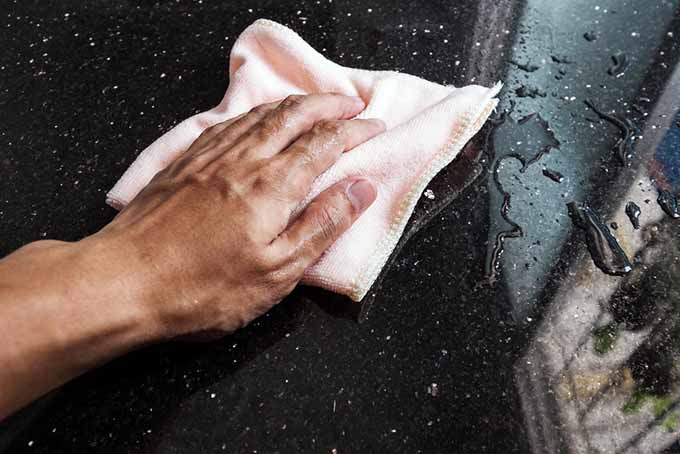
Àkọ́kọ́, ó ṣe pàtàkì láti jẹ́ kí àwo náà mọ́. Eruku afẹ́fẹ́ máa ń jẹ́ orísun ìbàjẹ́ àti ìyapa tó pọ̀ jùlọ lórí àwo, nítorí pé ó máa ń wọ inú àwọn iṣẹ́ àti ojú ibi tí a ti lè fọwọ́ kan àwọn àwo náà. Èkejì, bo àwo rẹ láti dáàbò bò ó kúrò lọ́wọ́ eruku àti ìbàjẹ́. A lè mú kí ìwúwo pẹ́ sí i nípa bíbo àwo náà nígbà tí a kò bá lò ó, nípa yíyí àwo náà padà lẹ́ẹ̀kọ̀ọ̀kan kí agbègbè kan má baà gba lílò púpọ̀, àti nípa yíyí àwọn àwo tí a fi irin ṣe nígbà tí a bá ń fi àwọn àwo carbide pádì rọ́pò. Bákan náà, yẹra fún gbígbé oúnjẹ tàbí ohun mímu sí orí àwo náà. Ṣàkíyèsí pé ọ̀pọ̀ ohun mímu afẹ́fẹ́ ní yálà carbonic tàbí phosphoric acid, èyí tí ó lè tú àwọn ohun alumọni afẹ́fẹ́ kúrò kí ó sì fi àwọn ihò kékeré sílẹ̀ sí ojú ilẹ̀.
Èyí sinmi lórí bí a ṣe ń lo àwo náà. Tí ó bá ṣeé ṣe, a gbani nímọ̀ràn láti nu àwo náà ní ìbẹ̀rẹ̀ ọjọ́ (tàbí iṣẹ́) àti ní ìparí rẹ̀. Tí àwo náà bá di èérí, pàápàá jùlọ pẹ̀lú omi tí ó ní epo tàbí omi tí ó lẹ̀ mọ́ ara, ó ṣeé ṣe kí a fọ ọ́ lẹ́sẹ̀kẹsẹ̀.
Fọ àwo náà déédéé pẹ̀lú omi tàbí ohun èlò ìfọmọ́ ojú ilẹ̀ ZHHIMG tí kò ní omi. Yíyan àwọn ohun èlò ìfọmọ́ ṣe pàtàkì. Tí a bá lo ohun èlò ìfọmọ́ ojú ilẹ̀ (acetone, lacquer thinner, alcohol, àti bẹ́ẹ̀ bẹ́ẹ̀ lọ), ìgbóná omi yóò mú kí ojú ilẹ̀ náà rọ̀, yóò sì yí i padà. Nínú ọ̀ràn yìí, ó ṣe pàtàkì láti jẹ́ kí àwo náà di déédéé kí a tó lò ó tàbí kí àṣìṣe wíwọ̀n ṣẹlẹ̀.
Àkókò tí a nílò fún àwo náà láti mú kí ó dọ́gba yóò yàtọ̀ síra pẹ̀lú ìwọ̀n àwo náà àti iye ìtútù rẹ̀. Wákàtí kan yẹ kí ó tó fún àwọn àwo kékeré. Wákàtí méjì lè wà fún àwọn àwo ńláńlá. Tí a bá lo ohun èlò ìfọmọ́ tí a fi omi ṣe, ìtútù yóò tún wà pẹ̀lú.
Àwo náà yóò tún pa omi mọ́, èyí sì lè fa ìpẹja àwọn ẹ̀yà irin tí ó fara kan ojú ilẹ̀ náà. Àwọn ohun èlò ìfọmọ́ kan yóò tún fi ohun tí ó lè lẹ̀ mọ́ ara wọn sílẹ̀ lẹ́yìn tí wọ́n bá ti gbẹ, èyí tí yóò fa eruku afẹ́fẹ́ mọ́ra, tí yóò sì mú kí ó bàjẹ́, dípò kí ó dínkù.
Èyí sinmi lórí bí a ṣe ń lo àwo náà àti àyíká rẹ̀. A gbani nímọ̀ràn pé kí a ṣe àtúnṣe àwo tuntun tàbí ohun èlò granite tí ó péye láàrín ọdún kan lẹ́yìn tí a bá ti rà á. Tí a bá rí i pé a ti lo àwo granite náà dáadáa, ó lè dára láti dín àkókò yìí kù sí oṣù mẹ́fà. Àyẹ̀wò oṣooṣù fún àwọn àṣìṣe wíwọ̀n tí a tún ṣe nípa lílo ìpele ẹ̀rọ itanna, tàbí irú rẹ̀, yóò fi àwọn ibi tí ó ń bàjẹ́ hàn, yóò sì gba ìṣẹ́jú díẹ̀ láti ṣe é. Lẹ́yìn tí a bá ti pinnu àwọn àbájáde àtúnṣe àkọ́kọ́, a lè fa àkókò ìṣàtúnṣe náà sí i tàbí kí a dín in kù bí ètò dídára inú rẹ ṣe gbà láàyè tàbí tí ó bá béèrè.
A le pese iṣẹ lati ran ọ lọwọ lati ṣayẹwo ati ṣatunṣe awo oju granite rẹ.

Ọpọlọpọ awọn idi ti o ṣeeṣe fun awọn iyatọ laarin awọn iṣiro:
- A fi omi gbígbóná tàbí òtútù fọ ojú ilẹ̀ náà kí a tó ṣe àtúnṣe rẹ̀, a kò sì fún un ní àkókò tó láti ṣe àtúnṣe rẹ̀ dáadáa.
- A fi àwo náà sí ipò tí kò tọ́.
- Ìyípadà iwọn otutu
- Àwọn àkọsílẹ̀
- Oòrùn taara tabi ooru didan miiran lori oju awo naa. Rí i dájú pé ìmọ́lẹ̀ oke kò mú kí ojú náà gbóná.
- Àwọn ìyàtọ̀ nínú ìpele ìgbóná òtútù láàárín ìgbà òtútù àti ìgbà ẹ̀ẹ̀rùn (Tí ó bá ṣeé ṣe, mọ ìwọ̀n ìgbóná òtútù òtútù ní àkókò tí a ṣe ìṣàtúnṣe náà.)
- A ko gba akoko to lati ṣe deedee awo naa lẹhin gbigbe
- Lilo ohun elo ayẹwo ti ko tọ tabi lilo ohun elo ti ko ni iwọn
- Àyípadà ojú ilẹ̀ tí ó jẹyọ nítorí ìbàjẹ́
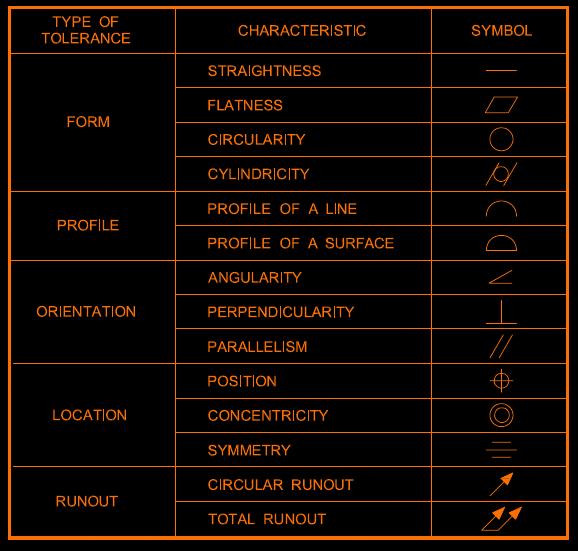
Iru awọn ihò melo ni o wa lori granite ti o peye?
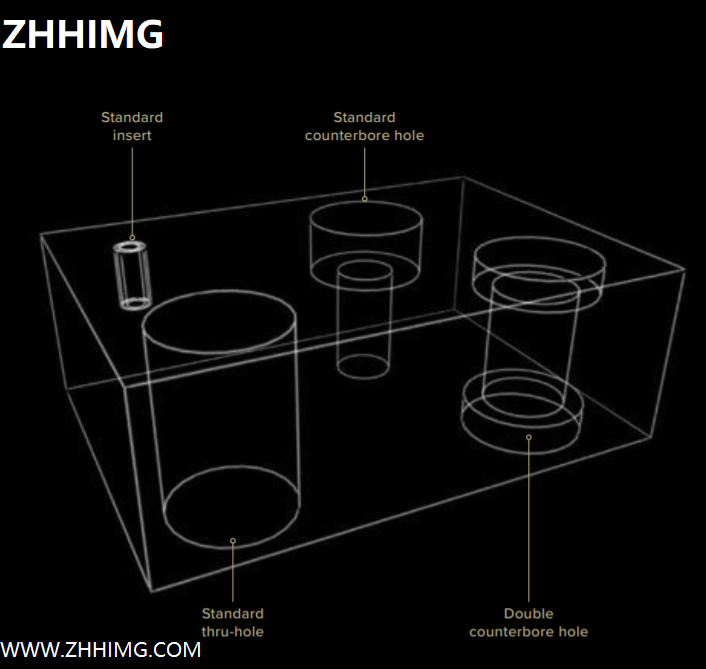
Iho lori Konge Granite irinše
Fún ọ̀pọ̀lọpọ̀ ilé iṣẹ́, àwọn yàrá àyẹ̀wò àti àwọn yàrá ìwádìí, àwọn àwo ojú ilẹ̀ granite tí ó péye ni a gbẹ́kẹ̀lé gẹ́gẹ́ bí ìpìlẹ̀ fún ìwọ̀n pípéye. Nítorí pé gbogbo ìwọ̀n ìlà sinmi lórí ojú ilẹ̀ ìtọ́kasí pípéye tí a ti mú àwọn ìwọ̀n ìkẹyìn wá, àwọn àwo ojú ilẹ̀ ni ó ń pèsè ìtọ́kasí tí ó dára jùlọ fún àyẹ̀wò àti ìṣètò iṣẹ́ kí a tó ṣe ẹ̀rọ. Wọ́n tún jẹ́ ìpìlẹ̀ tí ó dára jùlọ fún ṣíṣe àwọn ìwọ̀n gíga àti àwọn ojú ilẹ̀ tí a ti ń ṣe ìwọ̀n. Síwájú sí i, ìwọ̀n gíga ti fífẹ̀, ìdúróṣinṣin, dídára gbogbogbòò àti iṣẹ́-ọnà mú wọn jẹ́ àṣàyàn tí ó dára fún gbígbé àwọn ètò ẹ̀rọ, ẹ̀rọ itanna àti opitika tí ó ti gbọ́n. Fún èyíkéyìí nínú àwọn ìlànà ìwọ̀n wọ̀nyí, ó ṣe pàtàkì láti jẹ́ kí àwọn àwo ojú ilẹ̀ wà ní ìwọ̀n.
Repeat Measurements and Flatness
Àti ìwọ̀n títẹ́ àti títúnṣe ṣe pàtàkì láti rí i dájú pé ojú ilẹ̀ náà péye. A lè kà fífẹ̀ sí gbogbo àwọn ojú ilẹ̀ tí ó wà nínú àwọn ìpele méjì tí ó jọra, ìpele ìpìlẹ̀ àti ìpele òrùlé. Ìwọ̀n ìjìnlẹ̀ láàrín àwọn ìpele náà ni fífẹ̀ gbogbo ojú ilẹ̀ náà. Ìwọ̀n fífẹ̀ yìí sábà máa ń ní ìfaradà, ó sì lè ní àmì ìpele.
The flatness tolerances for three standard grades are defined in the federal specification as determined by the following formula:
DIN Standard, GB Standard, ASME Standard, JJS Standard... orílẹ̀-èdè tó yàtọ̀ síra pẹ̀lú ìdúró tó yàtọ̀ síra...
Awọn alaye diẹ sii nipa boṣewa.
In addition to flatness, repeatability must be ensured. A repeat measurement is a measurement of local flatness areas. It is a measurement taken anywhere on the surface of a plate that will repeat within the stated tolerance. Controlling local area flatness to a tighter tolerance than overall flatness guarantees a gradual change in surface flatness profile, thereby minimizing local errors.
Láti rí i dájú pé àwo ojú ilẹ̀ kan bá àwọn ìlànà ìwọ̀n títẹ́jú àti ìwọ̀n tí a tún ṣe mu, àwọn olùṣe àwo ojú ilẹ̀ granite gbọ́dọ̀ lo Federal Specification GGG-P-463c gẹ́gẹ́ bí ìpìlẹ̀ fún àwọn ìlànà wọn. Ìlànà yìí ń bójútó ìṣedéédé ìwọ̀n àtúnṣe, àwọn ohun-ìní ohun-ìní ti àwo ojú ilẹ̀ granite, ìparí ojú ilẹ̀, ibi tí a ti lè fi ìtìlẹ́yìn sí, líle, àwọn ọ̀nà tí a gbà láti ṣe àyẹ̀wò àti fífi àwọn ohun tí a fi so mọ́ra sínú rẹ̀.
Checking Plate Accuracy
Nípa títẹ̀lé àwọn ìlànà díẹ̀ tó rọrùn, ìdókòwò nínú àwo granite yẹ kí ó pẹ́ fún ọ̀pọ̀ ọdún. Ó sinmi lórí lílo àwo, àyíká ilé ìtajà àti ìṣedéédé tí a nílò, ìgbà tí a ń ṣàyẹ̀wò ìṣedéédé àwo ojú ilẹ̀ yàtọ̀ síra. Òfin gbogbogbòò ni pé kí àwo tuntun gba àtúnṣe pípé láàrín ọdún kan lẹ́yìn tí a bá ti rà á. Tí a bá ń lo àwo náà déédéé, ó dára láti dín àkókò yìí kù sí oṣù mẹ́fà.
Before a surface plate has worn beyond specification for overall flatness, it will show worn or wavy posts. Monthly inspection for repeat measurement errors using a repeat reading gage will identify wear spots. A repeat reading gage is a high-precision instrument that detects local error and can be displayed on a high magnification electronic amplifier.
An effective inspection program should include regular checks with an autocollimator, providing actual calibration of overall flatness traceable to National Institute of Standards and Technology (NIST). Comprehensive calibration by the manufacturer or an independent company is necessary from time to time.
Variations Between Calibrations
Ní àwọn ìgbà míì, ìyàtọ̀ wà láàárín ìṣàtúnṣe àwo ojú ilẹ̀. Nígbà míì, àwọn nǹkan bíi ìyípadà ojú ilẹ̀ tí ó ń ṣẹlẹ̀ nítorí ìbàjẹ́, lílo ohun èlò àyẹ̀wò tí kò tọ́ tàbí lílo ohun èlò tí kò ní ìṣàtúnṣe lè fa àwọn ìyàtọ̀ wọ̀nyí. Síbẹ̀síbẹ̀, àwọn ohun méjì tí ó wọ́pọ̀ jùlọ ni ìwọ̀n otútù àti ìtìlẹ́yìn.
One of the most important variables is temperature. For instance, the surface might have been washed with a hot or cold solution prior to calibration and not allowed sufficient time to normalize. Other causes of temperature change include drafts of cold or hot air, direct sunlight, overhead lighting or other sources of radiant heat on the surface of the plate.
There also can be variations in the vertical temperature gradient between winter and summer. In some cases, the plate is not allowed sufficient time to normalize after shipment. It is a good idea to record the vertical gradient temperature at the time the calibration is performed.
Another common cause for calibration variation is a plate that is improperly supported. A surface plate should be supported at three points, ideally located 20% of the length in from the ends of the plate. Two supports should be located 20% of the width in from the long sides, and the remaining support should be centered.
Only three points can rest solidly on anything but a precision surface. Attempting to support the plate at more than three points will cause the plate to receive its support from various combinations of three points, which will not be the same three points on which it was supported during production. This will introduce errors as the plate deflects to conform to the new support arrangement. Consider using steel stands with support beams designed to line up with the proper support points. Stands for this purpose are generally available from the surface plate manufacturer.
If the plate is properly supported, precise leveling is only necessary if an application specifies it. Leveling is not necessary to maintain the accuracy of a properly supported plate.
Extend Plate Life
Títẹ̀lé àwọn ìlànà díẹ̀ yóò dín wíwú lórí àwo granite kù, nígbẹ̀yìn-gbẹ́yín, yóò mú kí ó pẹ́ sí i.
Àkọ́kọ́, ó ṣe pàtàkì láti jẹ́ kí àwo náà mọ́. Eruku afẹ́fẹ́ máa ń jẹ́ orísun ìbàjẹ́ àti ìyapa tó pọ̀ jùlọ lórí àwo, nítorí pé ó máa ń wọ inú àwọn iṣẹ́ àti ojú ibi tí àwọn gauges bá ti fara kan.
It also is important to cover plates to protect it from dust and damage. Wear life can be extended by covering the plate when not in use.
Máa yí àwo náà padà nígbàkúgbà kí a má baà lo ibi kan ju bó ṣe yẹ lọ. Bákan náà, a gbà ọ́ nímọ̀ràn láti fi àwọn pádì carbide rọ́pò àwọn pádì irin tí a fi ń so mọ́ ara wọn nígbà tí a bá ń lo gígé.
Avoid setting food or soft drinks on the plate. Many soft drinks contain either carbonic or phosphoric acid, which can dissolve the softer minerals and leave small pits in the surface.
Where to Relap
Tí a bá nílò àtúnṣe sí àwo ilẹ̀ granite kan, ronú bóyá kí a ṣe iṣẹ́ yìí ní ibi tí a fẹ́ tàbí ní ibi tí a fẹ́ ṣe àtúnṣe sí. Ó dára láti jẹ́ kí a tún àwo náà ṣe ní ilé iṣẹ́ tàbí ní ibi tí a yà sọ́tọ̀. Ṣùgbọ́n, bí a kò bá ti gbó jù, ní gbogbogbòò, láàárín 0.001 ínṣì tí a fẹ́, a lè tún un ṣe ní ibi tí a fẹ́. Tí a bá ti gbó àwo kan dé ibi tí ó ju 0.001 ínṣì lọ tí kò bá ṣeé fara dà, tàbí tí ó bá ti gbó jù tàbí tí ó ti gbó, a gbọ́dọ̀ fi ránṣẹ́ sí ilé iṣẹ́ náà fún lílọ kí a tó tún un ṣe.
A calibration facility has the equipment and factory setting providing the optimum conditions for proper plate calibration and rework if necessary.
Ó yẹ kí a ṣọ́ra gidigidi nígbà tí a bá ń yan onímọ̀-ẹ̀rọ ìṣàtúnṣe àti àtúnṣe ojú ọ̀nà. Béèrè fún ìwé-ẹ̀rí kí o sì rí i dájú pé ohun èlò tí onímọ̀-ẹ̀rọ náà yóò lò ní ìṣàtúnṣe tí a lè tọ́pasẹ̀ rẹ̀. Ìrírí náà tún jẹ́ kókó pàtàkì, nítorí pé ó gba ọ̀pọ̀lọpọ̀ ọdún láti kọ́ bí a ṣe ń lo granite tí ó péye dáadáa.
Critical measurements start with a precision granite surface plate as a baseline. By ensuring a reliable reference by using a properly calibrated surface plate, manufacturers have one of the essential tools for reliable measurements and better quality parts.Q
Checklist for Calibration Variations
1. A fi omi gbígbóná tàbí òtútù fọ ojú ilẹ̀ náà kí a tó ṣe àtúnṣe rẹ̀, a kò sì fún un ní àkókò tó láti ṣe àtúnṣe rẹ̀.
2. A kò fi àwo náà sí i dáadáa.
3. Ìyípadà iwọn otutu.
4. Àwọn àkọsílẹ̀.
5. Oòrùn taara tabi ooru miiran ti o tan kaakiri lori awo naa. Rí i dájú pé iná ti o wa loke ko mu oju naa gbona.
6. Àwọn ìyàtọ̀ nínú ìyípadà ìgbóná òtútù láàárín ìgbà òtútù àti ìgbà ẹ̀ẹ̀rùn. Tí ó bá ṣeé ṣe, mọ ìwọ̀n otútù ìgbóná òtútù ní àkókò tí a ṣe ìṣàtúnṣe náà.
7. Àwo náà kò gba àkókò tó láti ṣe déédé lẹ́yìn tí a bá ti fi ránṣẹ́.
8. Lilo ohun elo ayẹwo ti ko tọ tabi lilo ohun elo ti ko ni iwọn.
9. Àyípadà ojú ilẹ̀ tí ó ń ṣẹlẹ̀ nítorí ìbàjẹ́.
Tech Tips
- Nítorí pé gbogbo ìwọ̀n ìlà dúró lórí ojú ìtọ́kasí tó péye tí a ti gbé àwọn ìwọ̀n ìkẹyìn jáde, àwọn àwo ojú ilẹ̀ ló ń fúnni ní ìtọ́kasí tó dára jùlọ fún àyẹ̀wò àti ìṣètò iṣẹ́ kí a tó ṣe ẹ̀rọ.
- Controlling local area flatness to a tighter tolerance than overall flatness guarantees a gradual change in surface flatness profile, thereby minimizing local errors.
- Ètò àyẹ̀wò tó gbéṣẹ́ gbọ́dọ̀ ní àwọn àyẹ̀wò déédéé pẹ̀lú autocollimator, èyí tó máa ń fúnni ní ìwọ̀n ìpele tó yẹ kí a lè tọ́ka sí lábẹ́ National Inspect Authority.
Láàrín àwọn èròjà mineral tí ó para pọ̀ di granite, ó ju 90% lọ ni feldspar àti quartz, nínú èyí tí feldspar jẹ́ èyí tí ó pọ̀ jùlọ. Feldspar sábà máa ń jẹ́ funfun, ewé, àti pupa ẹran, quartz sì jẹ́ funfun tí kò ní àwọ̀ tàbí ewé, èyí tí ó jẹ́ àwọ̀ ìpìlẹ̀ granite náà. Feldspar àti quartz jẹ́ àwọn ohun alumọni líle, ó sì ṣòro láti gbé pẹ̀lú ọ̀bẹ irin. Ní ti àwọn àmì dúdú nínú granite náà, pàápàá jùlọ mica dúdú, àwọn ohun alumọni mìíràn wà. Bó tilẹ̀ jẹ́ pé biotite jẹ́ rọ̀ díẹ̀, agbára rẹ̀ láti kojú wahala kò lágbára, ní àkókò kan náà wọ́n ní ìwọ̀n díẹ̀ nínú granite, nígbà míìrán ó kéré sí 10%. Èyí ni ipò ohun èlò tí granite ti lágbára ní pàtàkì.
Ìdí mìíràn tí granite fi lágbára ni pé àwọn èròjà alumọ́ọ́nì rẹ̀ so mọ́ ara wọn dáadáa, wọ́n sì wà lára ara wọn. Àwọn ihò ara wọn sábà máa ń dín ju 1% nínú gbogbo ìwọ̀n àpáta náà lọ. Èyí fún granite náà ní agbára láti kojú àwọn ìfúnpá líle, ọrinrin kò sì lè wọ̀ ọ́ lọ́nà tó rọrùn.
Àwọn ohun èlò granite ni a fi òkúta ṣe láìsí ipata, àìsí àsìdì àti alkali, àìlègbára ìfaradà àti pípẹ́ iṣẹ́, kò sí ìtọ́jú pàtàkì. Àwọn ohun èlò ìṣe déédé granite ni a sábà máa ń lò nínú iṣẹ́ ẹ̀rọ. Nítorí náà, a máa ń pè wọ́n ní àwọn ohun èlò ìṣe déédé granite tàbí àwọn ohun èlò granite. Àwọn ànímọ́ àwọn ohun èlò ìṣe déédé granite jẹ́ bákan náà gẹ́gẹ́ bí ti àwọn ìpìlẹ̀ granite. Ìfihàn sí iṣẹ́ irinṣẹ́ àti wíwọ̀n àwọn ohun èlò ìṣe déédé granite: Ìmọ̀ ẹ̀rọ ìṣe déédé àti ìmọ̀ ẹ̀rọ ìṣe déédé jẹ́ àwọn ìtọ́sọ́nà ìdàgbàsókè pàtàkì ti ilé iṣẹ́ ṣíṣe ẹ̀rọ, wọ́n sì ti di àmì pàtàkì láti wọn ìpele ìmọ̀ ẹ̀rọ gíga. Ìdàgbàsókè ìmọ̀ ẹ̀rọ tuntun àti ilé iṣẹ́ ààbò kò ṣeé yà sọ́tọ̀ kúrò nínú iṣẹ́ ẹ̀rọ ìṣe déédé àti ìmọ̀ ẹ̀rọ ìṣe déédé. Àwọn ohun èlò granite lè yọ́ nínú ìwọ̀n náà láìsí ìdíwọ́. Wíwọ̀n ojú ilẹ̀ iṣẹ́, àwọn ìfọ́ gbogbogbòò kò ní ipa lórí ìṣe déédé ìwọ̀n. Àwọn ohun èlò granite gbọ́dọ̀ jẹ́ àwòrán àti ṣíṣe gẹ́gẹ́ bí àwọn ohun tí ẹ̀ka ìbéèrè béèrè ṣe béèrè.
Aaye ohun elo:
Gẹ́gẹ́ bí gbogbo wa ṣe mọ̀, àwọn ẹ̀rọ àti ohun èlò púpọ̀ sí i ń yan àwọn èròjà granite tí ó péye.
A lo awọn eroja granite fun išipopada agbara, awọn mọto laini, cmm, cnc, ẹrọ lesa...
ẹ gbà láti kàn sí wa fún ìwífún síi.
Àwọn ohun èlò wíwọ̀n granite àti àwọn èròjà oníṣẹ́ granite ni a fi granite dúdú Jinan ṣe. Nítorí pé wọ́n péye, wọ́n pẹ́, wọ́n dúró ṣinṣin, wọ́n sì ń dènà ìbàjẹ́, wọ́n ti ń lò wọ́n sí i láti ṣe àyẹ̀wò ọjà ní àwọn ilé iṣẹ́ òde òní àti àwọn agbègbè ìmọ̀ sáyẹ́ǹsì bíi aero space àti àwọn ìwádìí sáyẹ́ǹsì.
Àwọn àǹfààní
----Igba meji le bi irin ti a fi simẹnti ṣe;
----Awọn iyipada kekere ti iwọn jẹ nitori awọn iyipada ti iwọn otutu;
----Kò sí ìfọ́, nítorí náà kò sí ìdádúró iṣẹ́!
----Kò sí ìbúgbà tàbí ìbúgbà nítorí ìrísí ọkà dídán àti pé kò ní lẹ̀ mọ́, èyí tí ó ń mú kí ó rọrùn fún ìgbà pípẹ́, tí kò sì fa ìbàjẹ́ sí àwọn ẹ̀yà ara tàbí ohun èlò míràn;
----Iṣẹ́ tí kò ní ìṣòro fún lílo pẹ̀lú àwọn ohun èlò oofa;
----Ọjọ́ pípẹ́ àti pé kò ní ipata, èyí tó ń mú kí owó ìtọ́jú rẹ̀ kéré.
Àwọn àwo ojú ilẹ̀ granite tí ó péye ni a gbé kalẹ̀ dé ìwọ̀n gíga tí ó tẹ́jú láti rí i pé ó péye, a sì ń lò ó gẹ́gẹ́ bí ìpìlẹ̀ fún gbígbé àwọn ẹ̀rọ onímọ̀ ẹ̀rọ, ẹ̀rọ itanna àti opitika tí ó lọ́gbọ́n.
Díẹ̀ lára àwọn ohun pàtàkì tí ó wà nínú àwo ilẹ̀ granite náà:
Iṣọkan ni Lile;
Awọn ipo ti o peye labẹ fifuye;
Ohun tí ó ń fa ìgbọ̀nsẹ̀;
Rọrùn láti nu;
Rírora ìdìpọ̀;
Porosity Kekere;
Kò ní ìfọ́;
Àìní-agbára
Àwọn Àǹfààní ti Àwo Ilẹ̀ Granite
First, the rock after a long period of natural aging, uniform structure, coefficient minimum, the internal stress completely disappear, not deformed, so the precision is high.
Fi Imeeli ranṣẹ
Skype
Èdè Gẹ̀ẹ́sì
Jẹ́mánì
Faranse
Èdè Pọtugali
Èdè Sípéènì
àwọn ará Japan
Àwọn ará Kòríà
Lárúbáwá
ará Ireland
Giriki
Àwọn ará Turkey
Ítálì
Àwọn ará Denmark
Romania
Èdè Indonesia
Czech
Èdè Swidish
Àwọn ọmọ Poland
Bask
Àwọn ará Catalan
Èdè Esperanto
Èdè Hindi
Lao
Èdè Albania
Èdè Árámáíkì
Arméníà
Èdè Azerbaijani
Belarusian
PBengali
Èdè Bosnia
Bulgarian
Cebuano
Chichewa
Kọsikani
Croatia
Àwọn ará Netherlands
Ístóníà
Àwọn ará Philippines
Finnish
Frisian
Èdè Galisi
Àwọn ará Georgian
Gujarati
Àwọn ará Haiti
Hausa
Hawaiianèdè HébérùHmong
Èdè HungaryIcelandicÍgbò
Èdè JavaneseKannada
Kazakhstan
Kmer
Kurdish
Kirgiz
Látìnì
Èdè Latvia
Èdè Lithuania
Luxembour..
Ọ́n ará Makedóníà
Malagasi
Malay
Malayalam
Malta
Àwọn ará Maori
Marathi
Èdè Mongolia
Èdè Burmese
Nepali
Norwegian
Páṣítò
Persia
Punjabi
Àwọn ará Serbia
Sesotho
Sinhala
Slovakia
- Èdè Slovenia
- Somali
- Èdè Samoa
- Àwọn ará Scotland Gaelic
- Ṣónà
- Sindhi
- Èdè Sudan
- Swahili
- Àwọn ará Tajiki
- Àwọn ará Tamil
- Telugu
Thai
Àwọn ará Ukraine
UrduAUzbeki2Àwọn ará VietnamLWelshAKhosa
Yiddish
Yorùbá
Zulu
Kinyarwanda
Àwọn ará Tatar
Àwọn ará Tọ́kì
Uighur
Àwọn ará Ṣáínà
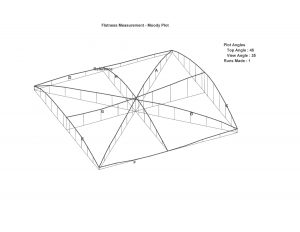
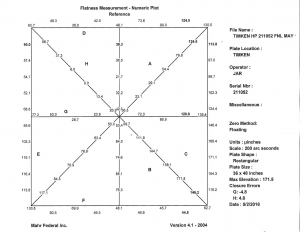
Routine surface plate calibration is necessary to ensure flatness and repeatability over time. The precision measurement group at Cross is ISO 17025 accredited for calibration of surface plate flatness and repeatability. We utilize the Mahr Surface Plate Certification System featuring:
- Moody and Profile Analysis,
- Isometric or Numeric plots,
- Multiple Run Average, and
- Automatic Grading According to Industry Standards.
The Mahr Computer Assisted Model determines any angular or linear deviation from absolute level, and is ideally suited for highly precise profiling of surface plates.
Intervals between calibrations will vary depending on the frequency of use, the environmental conditions where the plate is located, and the specific quality requirements of your company. Properly maintaining your surface plate may allow for longer intervals between each calibration, helps you avoid the added cost of relapping, and most importantly ensures the measurements you obtain on the plate are as accurate as possible. Although surface plates appear robust, they are precision instruments and should be treated as such. Here are some things to consider regarding care of your surface plates:
- Keep the plate clean, and if possible cover it when it is not in use
- Nothing should be placed on the plate other than gages or pieces to be measured.
- Don’t use the same spot on the plate every time.
- If possible, rotate the plate periodically.
- Respect the load limit of your plate
Precision Granite Base Can Improve Machine Tool Performances
Requirements are constantly increasing in mechanical engineering in general and in machine tool construction in particular. Achieving maximum precision and performance values without increasing costs are constant challenges to being competitive. The machine tool bed is a decisive factor here. Therefore, more and more machine tool manufacturers are relying on granite. Due to its physical parameters, it offers clear advantages that cannot be achieved with steel or polymer concrete.
Granite is a so-called volcanic deep rock and has a very dense and homogeneous structure with an extremely low coefficient of expansion, low thermal conductivity and high vibration damping.
Below you will discover why the common opinion that granite is mainly only suitable as machine base for high-end coordinate measuring machines is long outdated and why this natural material as a machine tool base is a very advantageous alternative to steel or cast iron even for high-precision machine tools.
We can manufacture granite components for dynamic motion, granite components for linear motors, granite components for ndt, granite components for xray, granite components for cmm, granite components for cnc, granite precision for laser, granite components for aerospace, granite components for precision stages...
High Added Value Without Additional Costs
The increasing use of granite in mechanical engineering is not so much due to the massive increase in the price of steel. Rather, it is because the added value for the machine tool achieved with a machine bed made of granite is possible at very little or no extra cost. This is proven by cost comparisons of well-known machine tool manufacturers in Germany and Europe.
The considerable gain in thermodynamic stability, vibration damping and long-term precision made possible by granite cannot be achieved with a cast iron or steel bed, or only at relatively high cost. For example, thermal errors can account for up to 75% of the total error of a machine, with compensation often attempted for by software – with moderate success. Due to its low thermal conductivity, granite is the better foundation for long-term precision.
With a tolerance of 1 μm, granite easily meets the flatness requirements according to DIN 876 for the degree of accuracy 00. With a value of 6 on the hardness scale 1 to 10, it is extremely hard, and with its specific weight of 2.8g/cm³ it almost reaches the value of aluminium. This also results in additional advantages such as higher feed rates, higher axis accelerations and an extension of the tool life for cutting machine tools. Thus, the change from a cast bed to a granite machine bed moves the machine tool in question into the high-end class in terms of precision and performance – at no extra cost.
Granite’s Improved Ecological Footprint
In contrast to materials such as steel or cast iron, natural stone does not have to be produced with a great deal of energy and using additives. Only relatively small amounts of energy are required for quarrying and surface treatment. This results in a superior ecological footprint, which even at the end of a machine’s life surpasses that of steel as a material. The granite bed can be the basis for a new machine or be used for completely different purposes such as shredding for road construction.
Nor are there any shortages of resources for granite. It is a deep rock formed from magma within the earth’s crust. It has ‘matured’ for millions of years and is available in very large quantities as a natural resource on almost all continents, including all of Europe.
Conclusion: The numerous demonstrable advantages of granite compared to steel or cast iron justify the increasing willingness of mechanical engineers to use this natural material as a foundation for high-precision, high-performance machine tools. Detailed information about granite properties, which are advantageous for machine tools and mechanical engineering, can be found in this further article.
A repeat measurement is a measurement of local flatness areas. The Repeat Measurement specification states that a measurement taken anywhere on the surface of a plate will repeat within the stated tolerance. Controlling local area flatness tighter than overall flatness guarantees a gradual change in surface flatness profile thereby minimizing local errors.
Most manufacturers, including imported brands, adhere to the Federal Specification of overall flatness tolerances but many overlook the repeat measurements. Many of the low value or budget plates available in the market today will not guarantee repeat measurements. A manufacturer who does not guarantee repeat measurements is NOT producing plates that meet the requirements of ASME B89.3.7-2013 or Federal Specification GGG-P-463c, or DIN 876, GB, JJS...
Both are critical to ensure a precision surface for accurate measurements. Flatness specification alone is not sufficient to guarantee measurement accuracy. Take as an example, a 36 X 48 Inspection Grade A surface plate, which meets ONLY the flatness specification of .000300". If the piece being checked bridges several peaks, and the gage being used is in a low spot, the measurement error could be the full tolerance in one area, 000300"! Actually, it can be much higher if the gage is resting on the slope of an incline.
Errors of .000600"-.000800" are possible, depending upon the severity of the slope, and the arm length of the gage being used. If this plate had a Repeat Measurement specification of .000050"F.I.R. then the measurement error would be less than .000050" regardless of where the measurement is taken on the plate. Another problem, which usually arises when an untrained technician attempts to resurface a plate on-site, is the use of Repeat Measurements alone to certify a plate.
The instruments that are used to verify repeatability are NOT designed to check overall flatness. When set to zero on a perfectly curved surface, they will continue to read zero, whether that surface is perfectly flat or perfectly concave or convex 1/2"! They simply verify the uniformity of the surface, not the flatness. Only a plate that meets both the flatness specification AND the repeat measurement specification truly meets the requirements of ASME B89.3.7-2013 or Federal Specification GGG-P-463c.
Ask us about or flatness specification and repeat measurement promise by calling +86 19969991659 or emailing INFO@ZHHIMG.COM
Yes, but they can only be guaranteed for a specific vertical temperature gradient. The effects of thermal expansion on the plate could easily cause a change in accuracy greater than the tolerance if there is a change in the gradient. In some cases, if the tolerance is tight enough, the heat absorbed from overhead lighting can cause enough of a gradient change over several hours.
Granite has a coefficient of thermal expansion of approximately .0000035 inches per inch per 1°F. As an example: A 36" x 48" x 8" surface plate has an accuracy of .000075" (1/2 of Grade AA) at a gradient of 0°F, the top and bottom are the same temperature. If the top of the plate warms up to the point where it is 1°F warmer than the bottom, the accuracy would change to .000275" convex ! Therefore, ordering a plate with a tolerance tighter than Laboratory Grade AA should only be considered if there is adequate climate control.
A surface plate should be supported at 3 points, ideally located 20% of the length in from the ends of the plate. Two supports should be located 20% of the width in from the long sides, and the remaining support should be centered. Only 3 points can rest solidly on anything but a precision surface.
The plate should be supported at these points during production, and it should be supported only at these three points while in use. Attempting to support the plate at more than three points will cause the plate to receive its support from various combinations of three points, which will not be the same 3 points on which it was supported during production. This will introduce errors as the plate deflects to conform to the new support arrangement. All zhhimg steel stands have support beams designed to line up with the proper support points.
If the plate is properly supported, precise leveling is only necessary if your application calls for it. Leveling is not necessary to maintain the accuracy of a properly supported plate.
Why Choose Granite for Machine Bases and Metrology Components?
The answer is 'yes' for almost every application. The advantages of granite include: No rust or corrosion, almost immune to warping, no compensating hump when nicked, longer wear life, smoother action, greater precision, virtually non-magnetic, low co-efficient of thermal expansion, and low maintenance cost.
Granite is a type of igneous rock quarried for its extreme strength, density, durability, and resistance to corrosion. But granite is also very versatile– it’s not just for squares and rectangles! In fact, Starrett Tru-Stone confidently works with granite components engineered in shapes, angles, and curves of all variations on a regular basis—with excellent outcomes.
Through our state of the art processing, cut surfaces can be exceptionally flat. These qualities make granite the ideal material to create custom-size and custom-design machine bases and metrology components. Granite is:
machineable
precisely flat when cut and finished
rust resistant
durable
long lasting
Granite components are also easy to clean. When creating custom designs, be sure to choose granite for its superior benefits.
STANDARDS / HIGH WEAR APPLICATIONS
The granite utilized by ZhongHui for our standard surface plate products has high quartz content, which provides greater resistance to wear and damage. Our Superior Black and Crystal Pink colors have low water absorption rates, minimizing the possibility of your precision gages rusting while setting on the plates. The colors of granite offered by ZhongHui result in less glare, which means less eyestrain for individuals using the plates. We have chosen our granite types while considering thermal expansion in an effort to keep this aspect minimal.
CUSTOM APPLICATIONS
When your application calls for a plate with custom shapes, threaded inserts, slots or other machining, you’ll want to select a material like Black Diabase. This natural material offers superior stiffness, excellent vibration dampening, and improved machinability.
Yes, if they are not too badly worn. Our factory setting and equipment allow the optimum conditions for proper plate calibration and rework if necessary. Generally, if a plate is within .001" of the required tolerance, it can be resurfaced on-site. If a plate is worn to the point where it is more than .001" out of tolerance, or if it is badly pitted or nicked, then it will need to be sent to the factory for grinding prior to relapping.
Great care should be exercised in selecting an on-site calibration and resurfacing technician. We urge you to use caution in selecting your calibration service. Ask for accreditation and verify the equipment that the technician will use has a National Inspection Institution traceable calibration. It takes many years to learn how to properly lap precision granite.
ZhongHui provides quick turn-around on calibrations performed in our factory. Send your plates in for calibration if possible. Your quality and reputation depend on the accuracy of your measurement instruments including surface plates!
Our black surface plates have a significantly higher density and are up to three times as stiff. Therefore, a plate made of the black does not need to be as thick as a granite plate of the same size to have equal or greater resistance to deflection. Reduced thickness means less weight and lower shipping costs.
Beware of others who use lower quality black granite in the same thickness. As stated above, properties of granite, like wood or metal, vary by material and color, and is not an accurate predictor of stiffness, hardness, or wear resistance. In fact, many types of black granite and diabase are very soft and not suitable for surface plate applications.
No. The specialized equipment and training necessary to rework these items requires that they be returned to the factory for calibration and rework.
Yes. Ceramic and granite have similar characteristics, and the methods used to calibrate and lap granite can be used with ceramic items as well. Ceramics are more difficult to lap than granite resulting in a higher cost.
Yes, provided that the inserts are recessed below the surface. If steel inserts are flush with, or above the surface plane, they must be spot-faced down before the plate can be lapped. If required, we can provide that service.
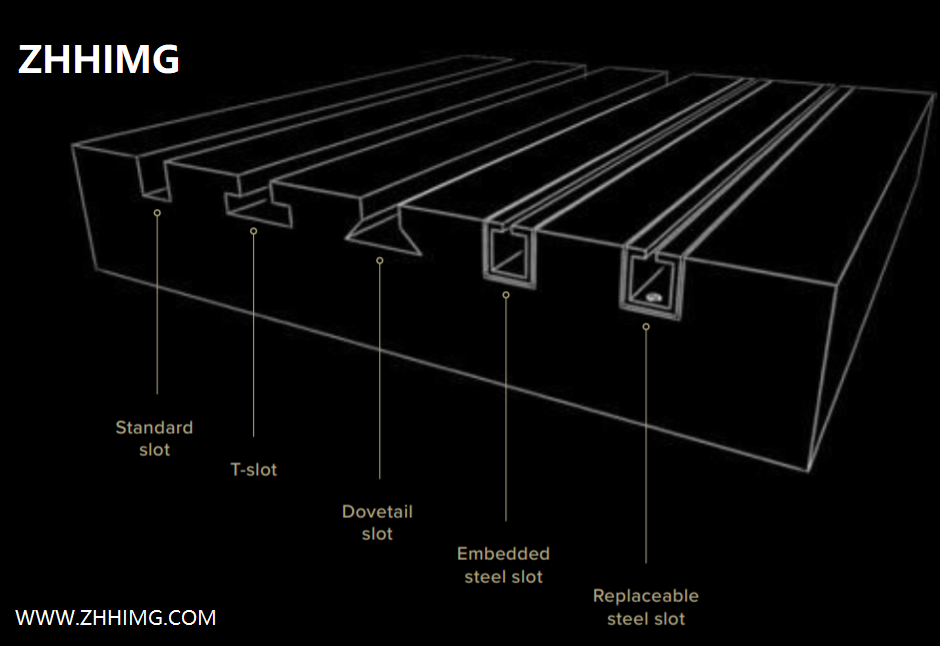
Yes. Steel inserts with the desired thread (English or metric) can be epoxy bonded into the plate at the desired locations. ZhongHui uses CNC machines to provide the tightest insert locations within +/- 0.005”. For less critical inserts, our locational tolerance for threaded inserts is ±.060". Other options include steel T-Bars and dovetail slots machined directly into the granite.
Inserts that are properly bonded using high strength epoxy and good workmanship will withstand a great deal of torsional and shear force. In a recent test, using 3/8"-16 threaded inserts, an independent testing laboratory measured the force required to pull an epoxy-bonded insert from a surface plate. Ten plates were tested. Out of these ten, in nine cases, the granite fractured first. The average load at the point of failure was 10,020 lbs. for gray granite and 12,310 lbs. for black. In the single case where an insert pulled free of the plate, the load at the point of failure was 12,990 lbs.! If a work piece forms a bridge across the insert and extreme torque is applied, it is possible to generate enough force to fracture the granite. Partially for this reason, ZhongHui gives guidelines for the maximum safe torque that can be applied the epoxy bonded inserts: https://www.zhhimg.com/standard-thread-inserts-product/
Yes, but only at our factory. At our plant, we can restore almost any plate to 'like-new' condition, usually for less than half the cost of replacing it. Damaged edges can be cosmetically patched, deep grooves, nicks, and pits can be ground out, and the attached supports can be replaced. In addition, we can modify your plate to increase its versatility by adding solid or threaded steel inserts and cutting slots or clamping lips, per your specifications.
Why Choose Granite?
Granite is a type of igneous rock formed in the Earth millions of years ago. The composition of igneous rock contained many minerals such as quartz that is extremely hard and wear-resistant. In addition to hardness and wear resistance granite has approximately half the coefficient of expansion as cast iron. As its volumetric weight is approximately one third that of cast iron, granite is easier to manoeuvre.
For machine bases and metrology components, black granite is the colour most used. Black granite has a higher percentage of quartz than other colours and is, therefore, the hardest wearing.
Granite is cost-effective, and cut surfaces can be exceptionally flat. Not only can it be hand lapped to achieve extremes of accuracy, but re-conditioning can be performed without moving the plate or table off-site. It is entirely a hand lapping operation and generally costs much less than re-conditioning a cast iron alternative.
These qualities make granite the ideal material to create custom-size and custom-design machine bases and metrology components such as the granite surface plate.
ZhongHui produces bespoke granite products that are created to support specific measurement requirements. These bespoke items vary from straight edges to tri squares. Due to the versatile nature of granite, the components can be produced to any size required; they are hard wearing and long-lasting.
Advantages of Granite Surface Plates
The importance of measuring on an even surface was established by British inventor Henry Maudsley in the 1800s. As a machine tool innovator, he determined that consistent production of parts required a solid surface for reliable measurements.
The industrial revolution created a demand for measuring surfaces, so engineering company Crown Windley created manufacturing standards. The standards for surface plates were first set by Crown in 1904 using metal. As the demand and cost for metal increased, alternative materials for the measuring surface were investigated.
In America, monument creator Wallace Herman established that black granite was an excellent surface plate material alternative to metal. As granite is non-magnetic and doesn’t rust, it soon became the preferred measuring surface.
A granite surface plate is an essential investment for laboratories and test facilities. A granite surface plate of 600 x 600 mm can be mounted on a support stand. The stands provide a working height of 34” (0.86m) with five adjustable points for levelling.
For reliable and consistent measurement results, a granite surface plate is crucial. As the surface is a smooth and stable plane, it enables instruments to be carefully manipulated.
The main advantages of granite surface plates are:
• Non-reflective
• Resistant to chemicals and corrosion
• Low coefficient of expansion compared with cart iron so less affected by temperature change
• Naturally rigid and hard-wearing
• The plane of the surface is unaffected if scratched
• Will not rust
• Non-magnetic
• Easy to clean and maintain
• Calibration and resurfacing can be done onsite
• Suitable for drilling for threaded support inserts
• High vibration damping
For many shops, inspection rooms and laboratories, precision granite surface plates are relied on as the basis for accurate measurement. Because every linear measurement depends on an accurate reference surface from which final dimensions are taken, surface plates provide the best reference plane for work inspection and layout prior to machining. They also are ideal bases for making height measurements and gaging surfaces. Further, a high degree of flatness, stability, overall quality and workmanship make them a good choice for mounting sophisticated mechanical, electronic and optical gaging systems. For any of these measurement processes, it is imperative to keep surface plates calibrated.
Repeat Measurements and Flatness
Both flatness and repeat measurements are critical to ensure a precision surface. Flatness can be considered as all points on the surface being contained within two parallel planes, the base plane and the roof plane. The measurement of distance between the planes is the overall flatness of the surface. This flatness measurement commonly carries a tolerance and may include a grade designation.
The flatness tolerances for three standard grades are defined in the federal specification as determined by the following formula:
Laboratory Grade AA = (40 + diagonal² / 25) x 0.000001 inch (unilateral)
Inspection Grade A = Laboratory Grade AA x 2
Tool Room Grade B = Laboratory Grade AA x 4
In addition to flatness, repeatability must be ensured. A repeat measurement is a measurement of local flatness areas. It is a measurement taken anywhere on the surface of a plate that will repeat within the stated tolerance. Controlling local area flatness to a tighter tolerance than overall flatness guarantees a gradual change in surface flatness profile, thereby minimizing local errors.
To ensure a surface plate meets both the flatness and repeat measurement specifications, manufacturers of granite surface plates should use Federal Specification GGG-P-463c as a basis for their specifications. This standard addresses repeat measurement accuracy, material properties of surface plate granites, surface finish, support point location, stiffness, acceptable methods of inspection and installation of threaded inserts.
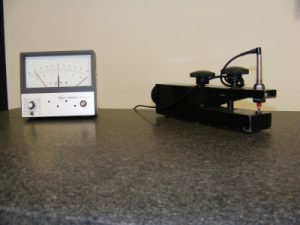
Before a surface plate has worn beyond specification for overall flatness, it will show worn or wavy posts. Monthly inspection for repeat measurement errors using a repeat reading gage will identify wear spots. A repeat reading gage is a high-precision instrument that detects local error and can be displayed on a high magnification electronic amplifier.
Checking Plate Accuracy
By following a few simple guidelines, an investment in a granite surface plate should last for many years. Depending on plate usage, shop environment and required accuracy, frequency of checking the surface plate accuracy varies. A general rule of thumb is for a new plate to receive a full recalibration within one year of purchase. If the plate is used frequently, it is advisable to shorten this interval to six months.
Before a surface plate has worn beyond specification for overall flatness, it will show worn or wavy posts. Monthly inspection for repeat measurement errors using a repeat reading gage will identify wear spots. A repeat reading gage is a high-precision instrument that detects local error and can be displayed on a high magnification electronic amplifier.
An effective inspection program should include regular checks with an autocollimator, providing actual calibration of overall flatness traceable to National Institute of Standards and Technology (NIST). Comprehensive calibration by the manufacturer or an independent company is necessary from time to time.
Variations Between Calibrations
In some cases, there are variations between surface plate calibrations. Sometimes factors such as surface change resulting from wear, incorrect use of inspection equipment or use of noncalibrated equipment can account for these variations. The two most common factors, however, are temperature and support.
One of the most important variables is temperature. For instance, the surface might have been washed with a hot or cold solution prior to calibration and not allowed sufficient time to normalize. Other causes of temperature change include drafts of cold or hot air, direct sunlight, overhead lighting or other sources of radiant heat on the surface of the plate.
There also can be variations in the vertical temperature gradient between winter and summer. In some cases, the plate is not allowed sufficient time to normalize after shipment. It is a good idea to record the vertical gradient temperature at the time the calibration is performed.
Another common cause for calibration variation is a plate that is improperly supported. A surface plate should be supported at three points, ideally located 20% of the length in from the ends of the plate. Two supports should be located 20% of the width in from the long sides, and the remaining support should be centered.
Only three points can rest solidly on anything but a precision surface. Attempting to support the plate at more than three points will cause the plate to receive its support from various combinations of three points, which will not be the same three points on which it was supported during production. This will introduce errors as the plate deflects to conform to the new support arrangement. Consider using steel stands with support beams designed to line up with the proper support points. Stands for this purpose are generally available from the surface plate manufacturer.
If the plate is properly supported, precise leveling is only necessary if an application specifies it. Leveling is not necessary to maintain the accuracy of a properly supported plate.
It is important to keep the plate clean. Airborne abrasive dust is usually the greatest source of wear and tear on a plate, as it tends to embed in workpieces and the contact surfaces of gages. Cover plates to protect them from dust and damage. Wear life can be extended by covering the plate when not in use.
Extend Plate Life
Following a few guidelines will reduce wear on a granite surface plate and ultimately, extend its life.
First, it is important to keep the plate clean. Airborne abrasive dust is usually the greatest source of wear and tear on a plate, as it tends to embed in workpieces and the contact surfaces of gages.
It also is important to cover plates to protect it from dust and damage. Wear life can be extended by covering the plate when not in use.
Rotate the plate periodically so that a single area does not receive excessive use. Also, it is recommended to replace steel contact pads on gaging with carbide pads.
Avoid setting food or soft drinks on the plate. Many soft drinks contain either carbonic or phosphoric acid, which can dissolve the softer minerals and leave small pits in the surface.
Where to Relap
When a granite surface plate needs re-surfacing, consider whether to have this service performed on-site or at the calibration facility. It is always preferable to have the plate relapped at the factory or a dedicated facility. If, however, the plate is not too badly worn, generally within 0.001 inch of the required tolerance, it can be resurfaced on-site. If a plate is worn to the point where it is more than 0.001 inch out of tolerance, or if it is badly pitted or nicked, then it should be sent to the factory for grinding prior to relapping.
A calibration facility has the equipment and factory setting providing the optimum conditions for proper plate calibration and rework if necessary.
Great care should be exercised in selecting an on-site calibration and resurfacing technician. Ask for accreditation and verify the equipment that the technician will use has a NIST-traceable calibration. Experience also is an important factor, as it takes many years to learn how to correctly lap precision granite.
Critical measurements start with a precision granite surface plate as a baseline. By ensuring a reliable reference by using a properly calibrated surface plate, manufacturers have one of the essential tools for reliable measurements and better quality parts.
Checklist for Calibration Variations
- The surface was washed with a hot or cold solution prior to calibration and was not allowed sufficient time to normalize.
- The plate is improperly supported.
- Temperature change.
- Drafts.
- Direct sunlight or other radiant heat on the surface of the plate. Be sure that overhead lighting is not heating the surface.
- Variations in the vertical temperature gradient between winter and summer. If at all possible, know the vertical gradient temperature at the time the calibration is performed.
- Plate not allowed sufficient time to normalize after shipment.
- Improper use of inspection equipment or use of noncalibrated equipment.
- Surface change resulting from wear.
Tech Tips
Because every linear measurement depends on an accurate reference surface from which final dimensions are taken, surface plates provide the best reference plane for work inspection and layout prior to machining.
Controlling local area flatness to a tighter tolerance than overall flatness guarantees a gradual change in surface flatness profile, thereby minimizing local errors.